
by Cummings Realty | Apr 14, 2025 | Agent Value, Buying Tips, For Buyers
Spring is one of the most active times of year in the real estate world. With more listings, more buyers, and more competition, standing out as a buyer can be a challenge. If you’re planning to purchase a home this season, making a strong and attractive offer is key.
In this article, we’ll break down four smart strategies to help your offer rise above the rest in today’s competitive spring housing market.
1. Get Pre-Approved — Not Just Pre-Qualified
Keyword focus: mortgage pre-approval, home loan pre-approval
Before you start making offers, make sure you’re pre-approved for a mortgage—not just pre-qualified.
Why this matters:
Pre-approval involves a full financial review by a lender and gives sellers confidence that you’re a serious, qualified buyer. It’s one of the easiest ways to boost the strength of your offer.
Pro tip:
Ask your lender for a fully underwritten pre-approval. This gives your offer even more credibility and helps it stand out from others.
2. Make a Strong (and Smart) Offer
Keyword focus: competitive offer, offer above asking price
In spring, homes that are priced right often receive multiple offers. A strategic bid—especially if it’s slightly above the asking price—can make a big difference.
Why this matters:
Sellers are more likely to accept offers that are competitive and demonstrate serious intent. But that doesn’t mean you should overpay.
Pro tip:
Have your agent run a comparative market analysis (CMA) so you can make a smart, informed offer that’s both attractive and financially sound.
3. Limit Contingencies to Make Your Offer Cleaner
Keyword focus: offer contingencies, real estate contingencies
While contingencies protect you as a buyer, too many can make your offer less appealing.
Why this matters:
Sellers prefer offers that carry less risk of falling through. A cleaner offer—one with fewer contingencies—can give you an edge.
Pro tip:
Avoid waiving important contingencies like the home inspection unless you’re absolutely sure. Instead, consider shortening the timelines or removing minor conditions to sweeten the deal.
4. Add a Personal Touch with a Buyer Letter
Keyword focus: home offer letter, personal letter to seller
Sometimes, it’s not all about numbers. Adding a short, heartfelt letter to your offer can make a meaningful impact.
Why this matters:
Sellers are often emotionally connected to their homes. A sincere letter explaining why you love the home can help your offer stand out on a personal level.
Pro tip:
Keep it brief and warm. Focus on what you love about the home and how you envision your life there. Stay positive and respectful—avoid mentioning changes or renovations.
Final Thoughts: Stand Out in the Spring Housing Market
In a busy spring real estate market, you need more than luck to land your dream home—you need a solid strategy. By getting pre-approved, crafting a competitive offer, limiting unnecessary contingencies, and adding a personal touch, you’ll be better positioned to win the home you love.
Looking for guidance on making a winning offer? Partner with a local real estate expert who knows your market and can advocate for you every step of the way.

by Cummings Realty | Feb 4, 2025 | Affordability, Buying Tips, First Time Home Buyers, For Buyers
Buying a home is an exciting journey, but it can also feel overwhelming at times. With so many steps involved, it’s easy to feel uncertain about where to start. Fortunately, there are two essential resources that can make the process much smoother, helping you find and secure your ideal home faster. Here’s how a knowledgeable real estate agent and a mortgage pre-approval can set you up for success:
1. A Knowledgeable Real Estate Agent
One of the most valuable resources in your home-buying journey is a professional real estate agent. A good agent brings local expertise and market insight to the table, and they can guide you through every step of the process, from searching for homes to closing the deal. Here’s how a real estate agent can help:
- Expert Market Insight: Real estate agents are immersed in the local market and can give you an insider’s view of neighborhoods, pricing trends, and which homes are worth checking out. They’re also in the know about upcoming listings, often having access to properties before they hit the public market.
- Negotiation Power: An experienced agent can be an invaluable asset when it comes to negotiations. They can help you craft a competitive offer, negotiate with sellers, and ensure you’re getting a fair deal, even in a hot market.
- Access to Listings: Through the Multiple Listing Service (MLS), real estate agents can provide access to listings that may not be available on popular real estate websites. This gives you an edge in finding homes that match your criteria before they get snapped up by other buyers.
- Guidance Through the Process: From the initial search to closing day, a real estate agent handles all the logistics, including scheduling showings, reviewing contracts, and ensuring you meet all necessary deadlines. Their expertise helps to streamline the process and ease any stress along the way.
A real estate agent can save you time and effort, helping you make informed decisions and guiding you toward the best home for your needs.
2. Mortgage Pre-Approval
Before you start touring homes, it’s crucial to know how much you can afford. That’s where mortgage pre-approval comes in. Getting pre-approved for a mortgage can provide you with a competitive edge and help you avoid any surprises down the road. Here’s why mortgage pre-approval is such a powerful resource:
- Confidence in Your Budget: Getting pre-approved gives you a clear picture of how much you can borrow, so you can focus on homes within your budget. This not only saves you time but helps ensure you’re looking at properties that you can actually afford.
- Faster Closing: With your financing already lined up, the closing process can be much faster. Since your lender has already reviewed your financial documents and credit history, it streamlines the approval process when it’s time to make an offer.
- Competitive Edge: In a competitive market, being pre-approved for a mortgage is a huge advantage. Sellers are more likely to take your offer seriously because they know you’re a qualified buyer who can close quickly. This can be especially important if you’re in a bidding war with other potential buyers.
- Interest Rate Lock: When you’re pre-approved, many lenders will offer to lock in an interest rate for a certain period. This can protect you from rising rates before you close on your home, potentially saving you money in the long run.
To get pre-approved, you’ll need to provide some basic financial information, such as proof of income, credit history, and any outstanding debts. It’s an important step in the home-buying process and gives you a clear idea of what you can afford.
Conclusion
Navigating the home-buying process can be complex, but using the right resources can make it much easier. By partnering with a knowledgeable real estate agent and securing mortgage pre-approval, you’ll be well-positioned to find your ideal home and negotiate a great deal. These two resources not only help you save time but also give you the confidence and clarity to make informed decisions, bringing you one step closer to homeownership.
So, if you’re ready to start your home-buying journey, consider reaching out to an experienced real estate agent and getting pre-approved for a mortgage. With the right tools in hand, you’ll be on your way to making your dream home a reality—sooner rather than later!

by Cummings Realty | Jan 29, 2025 | Buying Tips, For Buyers
In a significant shift in the housing market, 17% of homebuyers are opting for multi-generational homes— the highest level ever recorded by the National Association of Realtors (NAR). But what’s driving this growing trend? While multi-generational living has traditionally been used to care for aging parents, today’s homebuyers are increasingly choosing this option for a different reason: affordability.
Why More People Are Choosing Multi-Generational Homes
Multi-generational homes—where families, adult children, or even distant relatives live together under one roof—offer various benefits that make them an attractive solution for today’s challenges. Traditionally, this living arrangement was driven by the need to care for older family members. However, the landscape has shifted due to rising homeownership costs and the need for more affordable living options.
According to the latest data from NAR, the main reason more people are choosing multi-generational living today is cost savings. The increasing prices of homes, combined with rising mortgage rates, are making it difficult for many individuals or smaller families to afford homes on their own.
By pooling their financial resources, multi-generational families can share the costs of homeownership, such as the mortgage, utility bills, and maintenance expenses. This collaborative approach makes it easier to manage the financial burden of purchasing a home, allowing families to live more comfortably without overextending themselves.
Financial Benefits: Affordability and More Space
One of the most compelling reasons to consider multi-generational living is the financial benefit it offers. Families can combine their incomes to secure a larger home or even afford a home in a more desirable location—something that might otherwise be out of reach with today’s high home prices.
As Rick Sharga, Founder and CEO at CJ Patrick Company, puts it, “There are a few ways to improve affordability… purchase a property with a family member.” This growing trend of multi-generational households reflects the need for solutions that ease the financial pressures of homeownership.
Beyond the Finances: Strengthening Family Bonds
In addition to the financial perks, multi-generational living can also bring families closer together. Living with extended family provides more opportunities for quality time, strengthens family relationships, and promotes a sense of togetherness. For those who value family connections, this living arrangement can foster deeper bonds while providing mutual support.
Conclusion: A Worthwhile Consideration
If you’re finding it difficult to afford a home on your own, buying a multi-generational home could be a solution worth considering. Not only does it provide a way to overcome financial hurdles, but it also offers the chance to create lasting family memories.
Before making your decision, it’s important to consult with a local real estate agent who can help you explore your options and find a home that meets the needs of your family. With the rising costs of homeownership, a multi-generational home might be the ideal choice for those looking for more space, less financial stress, and stronger family ties.

by Cummings Realty | Dec 20, 2024 | Advice for Buyers, Buying Tips
Photo by Grant Durr on Unsplash
Dreaming of owning a vacation home where you can escape the hustle and bustle of everyday life? Finding the picture-perfect vacation home can be an exciting yet challenging process, whether a beachside bungalow, a chic city apartment, or acozy mountain cabin. Here’s a guide to help you navigate the journey and make a smart investment.
1. Define Your Needs and Wants
Start by making a list of what you need and want in a vacation home. Consider factors like location, size, amenities, and proximity to attractions. Do you want a place near the beach, the mountains, or a city? How many bedrooms and bathrooms do you need? Is a pool or a large backyard important to you? Having a clear idea of your priorities will help narrow down your options.
2. Set a Budget
Determine how much you can afford to spend on a vacation home. These ongoing costs include property taxes, insurance, maintenance, and utilities, as well as the purchase price. Getting pre-approved for a mortgage is a good idea to understand your financing options. Remember to factor in additional costs, such as property management fees and marketing expenses, if you plan to rent out the property when you’re not using it.
3. Research Locations
Location is key when it comes to vacation homes. Research different areas to find a location that suits your lifestyle and preferences. Consider the climate, local attractions, and the overall vibe of the area. It’s also essential to consider accessibility – how easy is it to get to your vacation home from your primary residence? If you plan to rent it out, look for locations with high rental demand.
4. Visit Potential Properties
Once you’ve identified a few potential locations, start visiting properties. Pictures and descriptions online can only tell you so much – seeing a property in person will give you a better sense of its condition, layout, and surroundings. Take your time to explore the neighborhood, talk to locals, and get a feel for the area. If possible, visit during different seasons to understand how the property and location change throughout the year.
5. Consider the Rental Potential
If you are considering renting out your vacation home, research the area’s rental market. Look at similar properties to see how much they’re renting for and how often they’re booked. Working with a property management company in the local area to handle bookings, maintenance, and guest communication can be very beneficial. A good rental income can help offset the costs of owning a vacation home and even turn it into a profitable investment.
6. Check Local Regulations
Before making a purchase, check local regulations regarding vacation rentals. Some areas have strict rules about short-term rentals, including zoning laws, permit requirements, and occupancy limits. Make sure you understand these regulations to avoid any legal issues down the road.
7. Work with a Real Estate Agent
A real estate agent working in the local area can be a priceless resource in your search for the perfect vacation home. They can help you find vacation homes that meet your criteria based on in-depth market knowledge, and can guide you through the buying process. Look for an agent who specializes in vacation properties and has experience in your desired location.
8. Think Long-Term
When buying a vacation home, think about your long-term plans. Will this property still meet your needs in five or ten years? Consider your lifestyle and whether the property can accommodate those changes. A vacation home is a significant investment, so choosing a property you’ll enjoy for years to come is essential.
Conclusion
Finding the perfect vacation home takes time, research, and careful planning. By defining your needs, setting a budget, researching locations, and considering rental potential, you can make an intelligent investment that provides years of enjoyment. Happy house hunting, and here’s to finding your dream getaway!
I hope this helps! If you have any other questions or need further assistance, feel free to ask.

by Cummings Realty | Oct 9, 2024 | Buyers, Buying Tips, First Time Home Buyers, Inventory, New Construction
When you’re planning a move, it’s normal to wonder where you’ll end up and what your future home is going to look like. Maybe you’ve got a specific picture of that house in your mind. But unless you came into this process knowing you want to buy a newly built home, you may not have pictured new home construction.
A trusted real estate agent can help walk you through these two reasons you may want to reconsider that.
1. Adding Newly Built Homes Could Give You More Options
There are two types of homes on the market: new and existing. A newly built home refers to a house that was just built or is under construction. An existing home is one a previous homeowner has already lived in. Right now, the inventory of existing homes is tight. But there may be options for you on the new home side of things.
Data from the Census and the National Association of Realtors (NAR) shows that newly built homes are a bigger part of today’s housing inventory than the norm (see graph below):
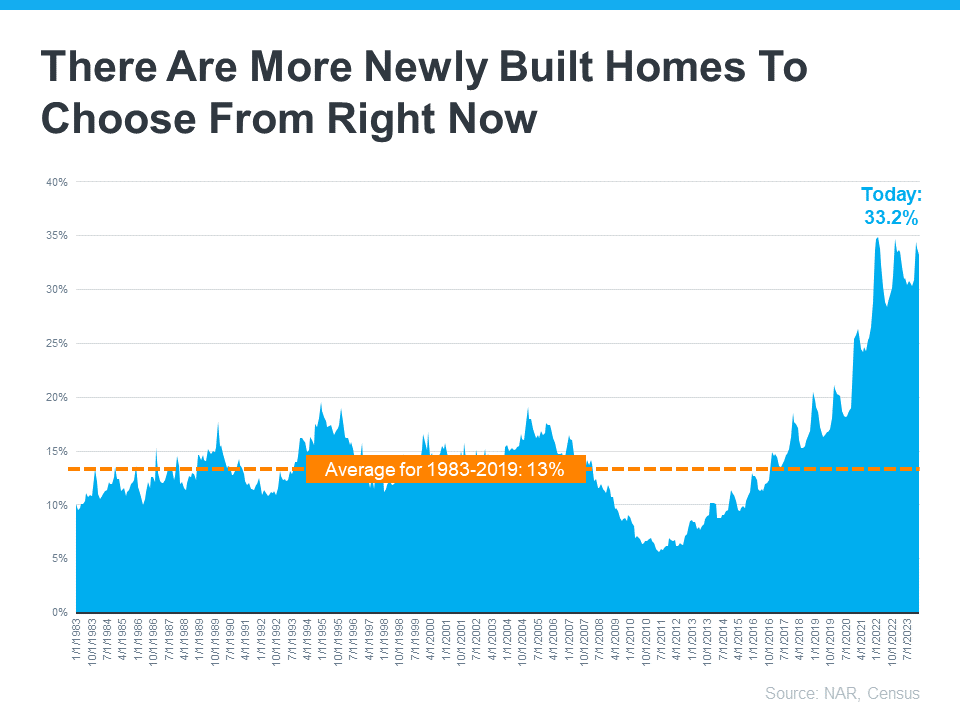
From 1983 to 2019 (the last normal year in the market), newly built homes made up only 13% of the total inventory of homes for sale. But today that number has climbed to over 33%.
Rest assured, after over a decade of underbuilding, builders aren’t overdoing it today. Even with an increase in new construction today, there’s still a significant housing shortage overall. But for you, the uptick in new builds can be a game changer because it gives you more options for your search.
2. Newly Built Homes May Be More Affordable Than You’d Think
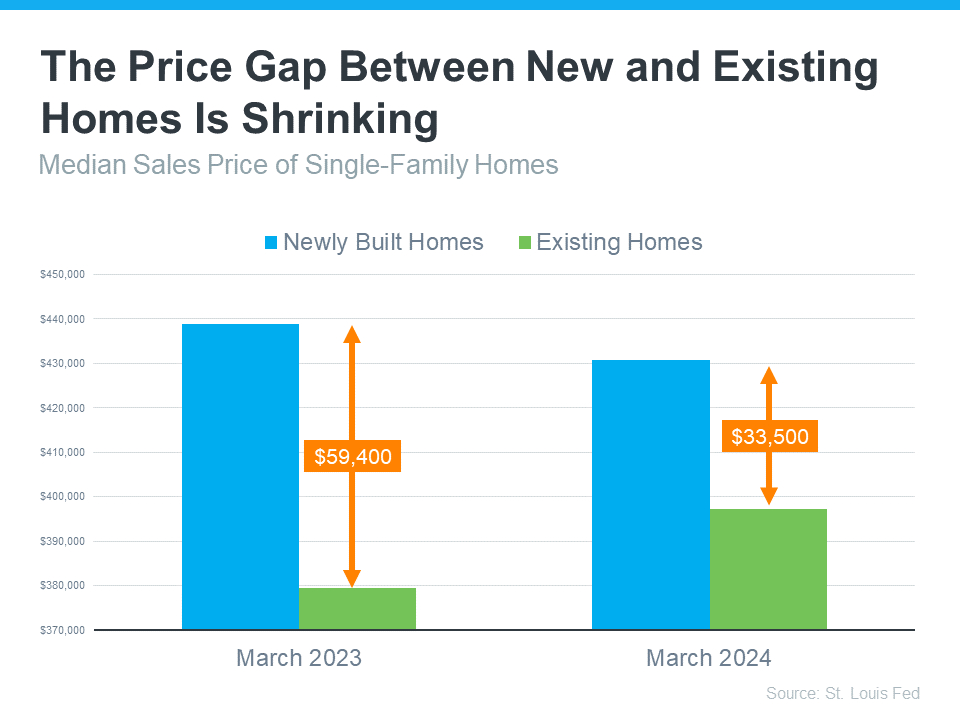
You may still be wondering if a new build could really be an option for you. If you’ve previously written them off because you thought they would be out of your budget, consider this. The price gap between a newly built home and an existing house is shrinking. Here’s why.
Builders are going to build what’s in demand. And they know people need more options right now, especially ones that are smaller and potentially more affordable. So, they’re focusing on building smaller homes at lower price points. The graph below shows the price difference between new and existing homes is shrinking as that happens:
As LendingTree explains:
“In the past, newly built homes have been much more expensive than existing homes — but that gap has been getting smaller recently. In some places today, you may find that the cost to build versus buy is roughly the same.”
And an article from CNBC says:
“While new builds are still sold for slightly more than existing homes, the price gap has significantly narrowed . . .”
Not to mention, some builders are even offering price cuts and mortgage rate buy-downs right now to sweeten the deal. Today there are many reasons new builds may be worth considering. Other buyers sure seem to think so. As Freddie Mac says:
“As the supply of existing homes for sale remains low and home prices continue to rise, more buyers are choosing to purchase new homes than in previous years.”
Just know that buying a newly built home isn’t the same as buying an existing one. Builder contracts have different fine print. So, partner with a local agent who knows the market, builder reputations, and what to look for in those contracts so you have an expert on your side to help you explore this option.
Bottom Line
If you want to find out what builders are doing in your area, connect with a real estate agent. And if you’re willing to cast a wider net to open up your options even more, that agent can talk to you about broadening your search to include other towns nearby.
